
Contact Us Now

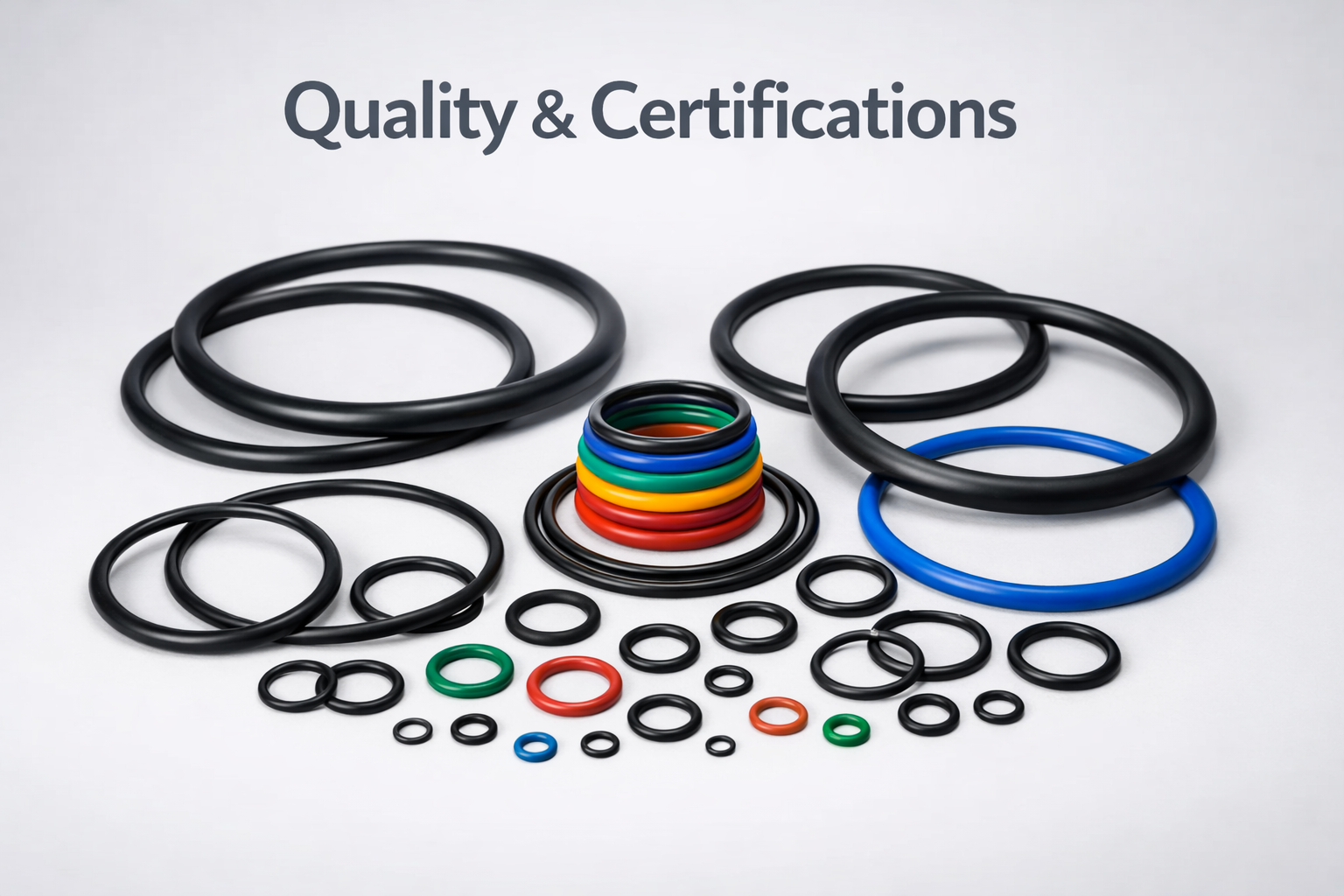
Quality & Certifications
Reliable Quality Control and Compliance Documentation for OEM, Industrial, and Specialized Sealing Applications
Quality Management and Control Philosophy
Quality management is a critical factor in the reliability and performance of O-rings and sealing products. Our quality system focuses on process control, material consistency, and dimensional verification to support industrial, OEM, and long-term supply applications. Traceability, documented procedures, and continuous monitoring are the foundation of our quality assurance program.
Quality Approach and Inspection Procedures
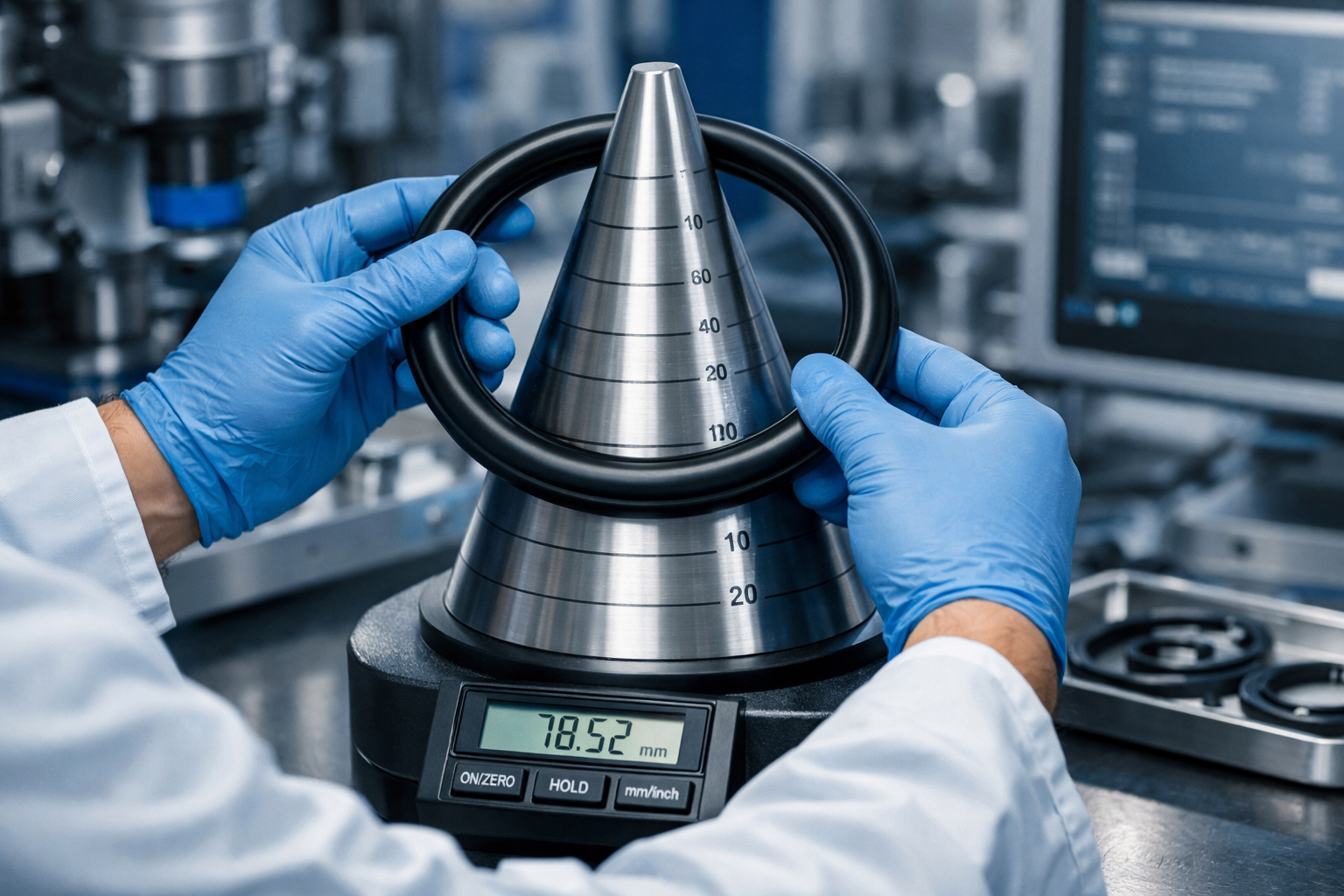
Incoming Material Control
Raw materials and compounds are verified before production to ensure they meet specified requirements for hardness, appearance, and processability. Material identity, hardness spot checks, and contamination inspections are enforced at the receiving stage to maintain consistency across all production batches.
In-Process Quality Control
Quality checks are integrated into the production process to detect variation early and maintain dimensional consistency. This includes dimensional sampling, process parameter monitoring, and visual inspection after molding and finishing stages. Each production batch is tracked and documented for full traceability.
- Dimensional Sampling: Periodic checks of inside diameter (ID) and cross-section (CS) dimensions
- Process Monitoring: Temperature, pressure, and cycle time verification
- Visual Inspection: Surface finish, color consistency, and defect detection
Final Inspection & Verification
Comprehensive Final Testing
Finished O-rings undergo a final inspection based on order requirements and applicable standards. Typical verification includes:
- Dimensional Verification: Inside diameter (ID) and cross-section (CS) measurements against AS568, ISO 3601, or DIN 3771 specifications
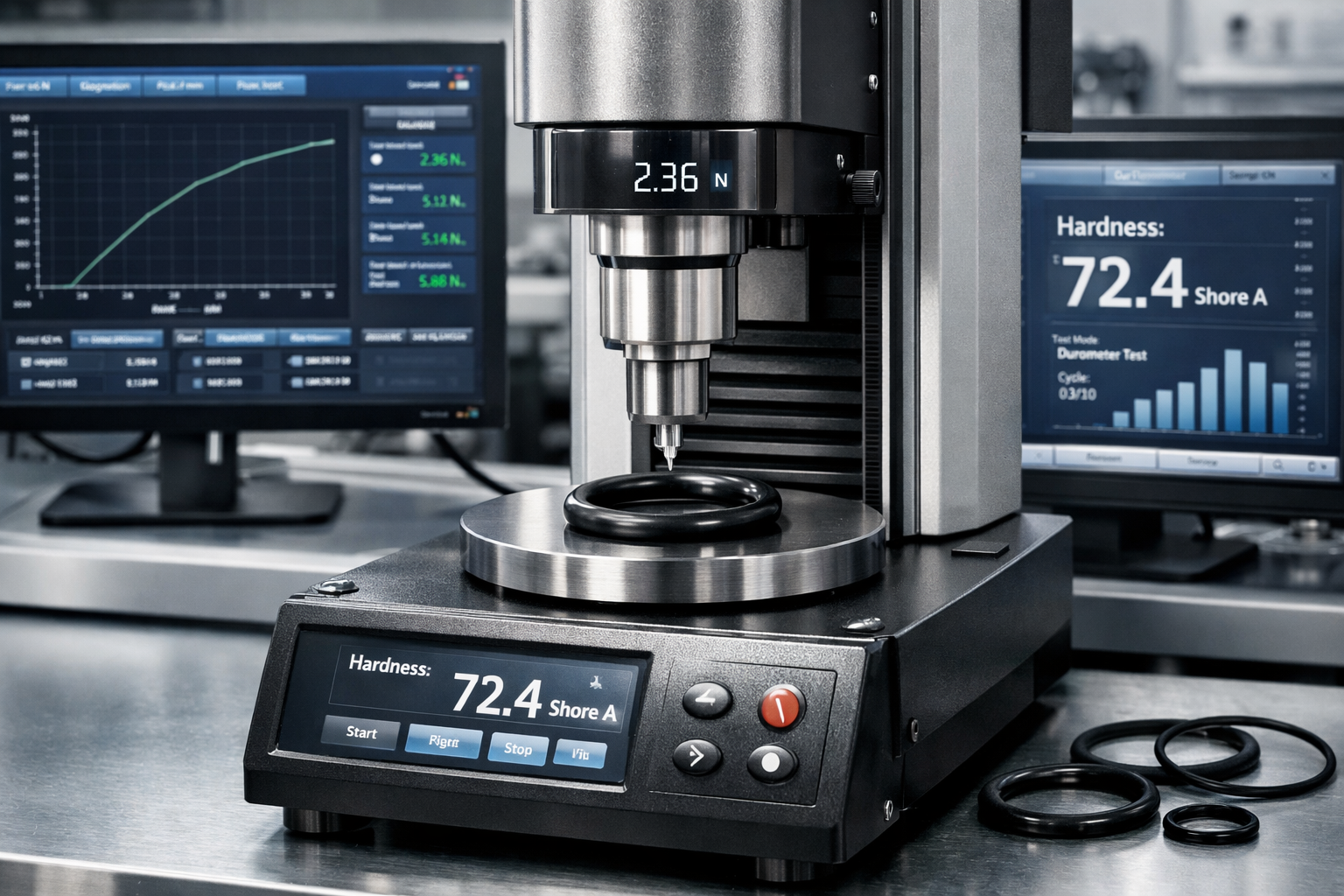
- Hardness Testing: Durometer (Shore A) measurements to confirm material properties
- Appearance Assessment: Surface defects, color uniformity, and packaging integrity
- Documentation: Batch traceability, test certificates, and compliance records
International Standards and Dimensional Compliance
We manufacture O-rings in accordance with commonly used international dimensional standards. Compliance is based on customer requirements and applicable specifications. Our quality system ensures that all products meet or exceed the dimensional tolerances and material requirements specified in the relevant standards.
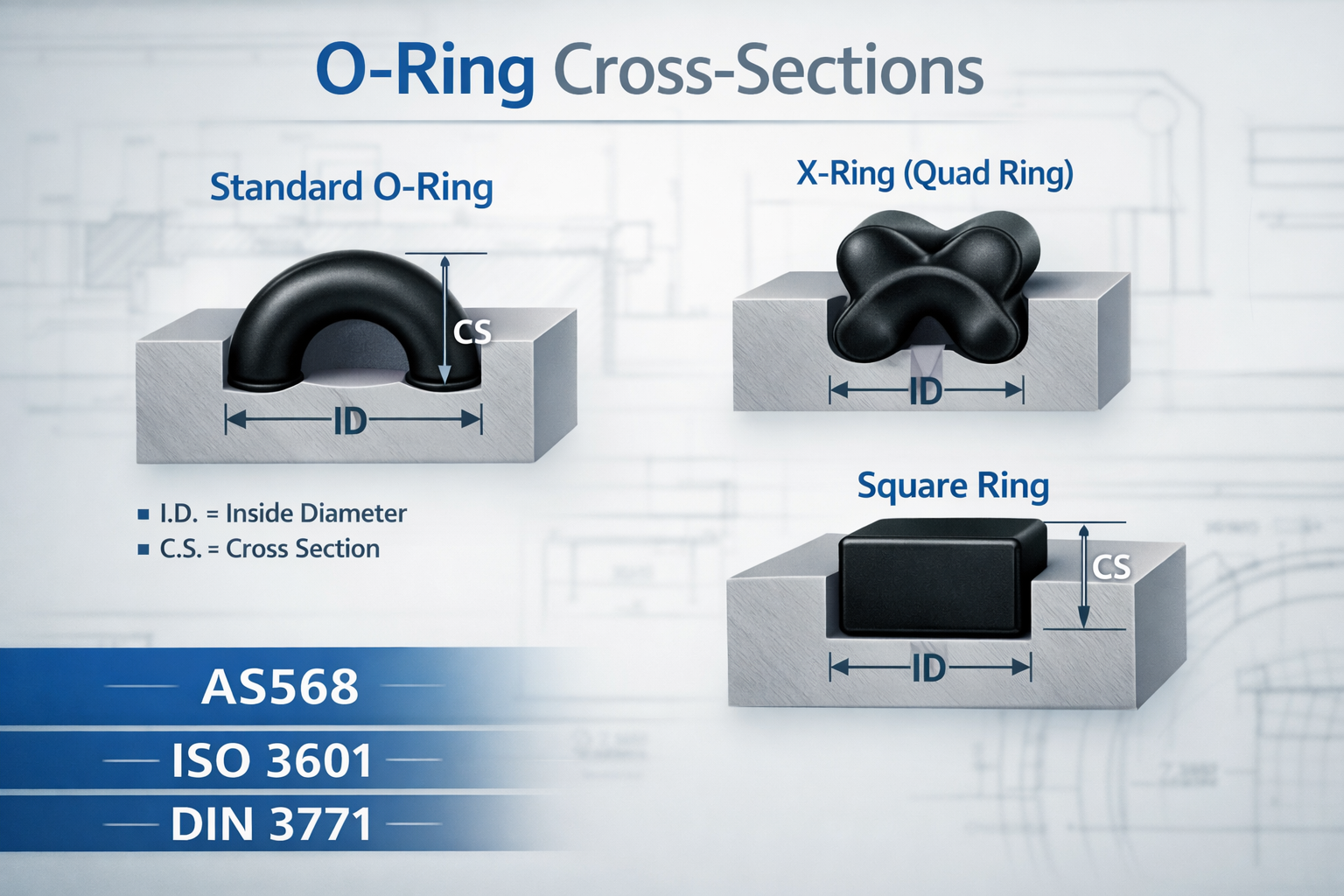
Key Standards
AS568
Inch-series O-ring dimensional standard widely used in North America and globally for industrial applications. Specifies standard sizes, tolerances, and acceptance criteria for elastomer O-rings.
ISO 3601
Metric O-ring sizes, tolerances, and acceptance criteria standard. Defines dimensional specifications, material requirements, and testing procedures for elastomer O-rings used in industrial equipment.
DIN 3771
Legacy metric system still referenced in specific European markets. Provides alternative dimensional specifications and tolerances for O-rings in specialized applications.
Extended Compliance: For highly regulated applications such as aerospace or automotive, extended quality systems (e.g., ISO 9001:2015) and industry certification (e.g., IATF 16949) may be requested. Our team can work with you to establish customized quality checkpoints and documentation protocols aligned with your specific requirements.
Frequently Asked Technical Questions
What quality documentation can be provided?
We provide comprehensive quality documentation based on order requirements and material type. Standard documentation includes:
- Material Data Sheets (MDS): Technical specifications for elastomer compounds, including hardness, tensile strength, and chemical resistance
- Inspection Reports: Detailed test results for dimensional verification, hardness testing, and appearance assessment
- Batch Traceability Records: Complete production history, raw material lot numbers, and process parameters
- Declarations of Conformity: Compliance statements confirming adherence to AS568, ISO 3601, or DIN 3771 standards
- Test Certificates: Third-party certification where required by customer specifications
How do you ensure repeatability across production batches?
Batch-to-batch repeatability is achieved through a combination of controlled processes and rigorous documentation:
- Material Traceability: Each raw material lot is tracked from supplier through production, with hardness and appearance verification at receiving
- Process Control: Production parameters (temperature, pressure, cycle time) are monitored and recorded for every batch
- Statistical Process Control (SPC): Dimensional sampling data is analyzed to detect trends and maintain statistical control
- Production Records: Comprehensive documentation under our ISO 9001:2015-aligned quality system ensures full traceability and repeatability verification
- Periodic Audits: Regular internal audits and management reviews confirm compliance with established procedures
Can quality checkpoints be customized for OEM specifications?
Yes. We work closely with OEM customers to align quality checkpoints and documentation with your specific requirements and applicable industry standards. Customization options include:
- Enhanced Inspection Protocols: Additional dimensional checks, material testing, or appearance criteria beyond standard requirements
- Specialized Documentation: Custom test reports, certificates of analysis, or compliance statements tailored to your supply chain requirements
- Industry-Specific Standards: Compliance with aerospace (AS9100), automotive (IATF 16949), or medical device standards
- Frequency and Sampling Plans: Customized sampling strategies (100% inspection, AQL-based sampling, or continuous monitoring)
- Traceability Requirements: Enhanced batch tracking, serialization, or lot-level documentation as needed
Contact our quality team to discuss your specific requirements and establish a customized quality agreement.
What materials are available, and what are their typical hardness ranges?
We manufacture O-rings from a range of elastomer materials, each with distinct hardness and performance characteristics:
- NBR (Nitrile): 60–90 Shore A; excellent oil and fuel resistance; standard for industrial hydraulics and pneumatics
- FKM (Viton®): 70–90 Shore A; superior chemical and temperature resistance; ideal for aggressive media and high-temperature applications
- EPDM: 50–90 Shore A; excellent water and steam resistance; suitable for water systems and low-temperature applications
- Silicone: 40–80 Shore A; wide temperature range (-55°C to +200°C); used in food-grade and medical applications
- PTFE (Teflon®) Encapsulated: Custom hardness; superior chemical resistance; for highly aggressive or specialized media
Hardness is verified during incoming material inspection and final testing. Custom hardness specifications can be accommodated upon request.
What is the typical lead time for quality documentation or custom orders?
Lead times depend on order complexity and documentation requirements:
- Standard Orders: 4–6 weeks for production and quality verification; standard documentation provided upon completion
- Custom Quality Requirements: 6–8 weeks; includes development of customized inspection protocols and documentation procedures
- Expedited Orders: 2–3 weeks available for qualified customers with established quality agreements
- Quality Documentation: Provided within 5 business days of order completion
Contact our sales team to discuss your specific timeline and requirements. We are committed to supporting your project schedule while maintaining our quality standards.
Ready to Discuss Your Quality Requirements?
If your project has specific inspection, documentation, or compliance needs, our team is ready to assist. Please provide your specifications and required standards, and we will follow up within 24 hours with a detailed quality proposal tailored to your requirements.