
Contact Us Now

DIN 3771 O-Rings: Precision Metric Sealing Solutions for Industrial Excellence
Engineered to meet the rigorous DIN 3771 standard, our metric O-rings provide reliable sealing performance across diverse industrial environments. From Grade N general-purpose seals to Grade S high-precision components, we deliver the durability and accuracy required by modern engineering.
- Full Compliance with DIN 3771 Part 1-4 Standards
- Available in Grade N (Normal) and Grade S (Special) Quality
- Wide Range of Materials: NBR, FKM, EPDM, and Silicone
- Custom Sizes and Material Formulations Available
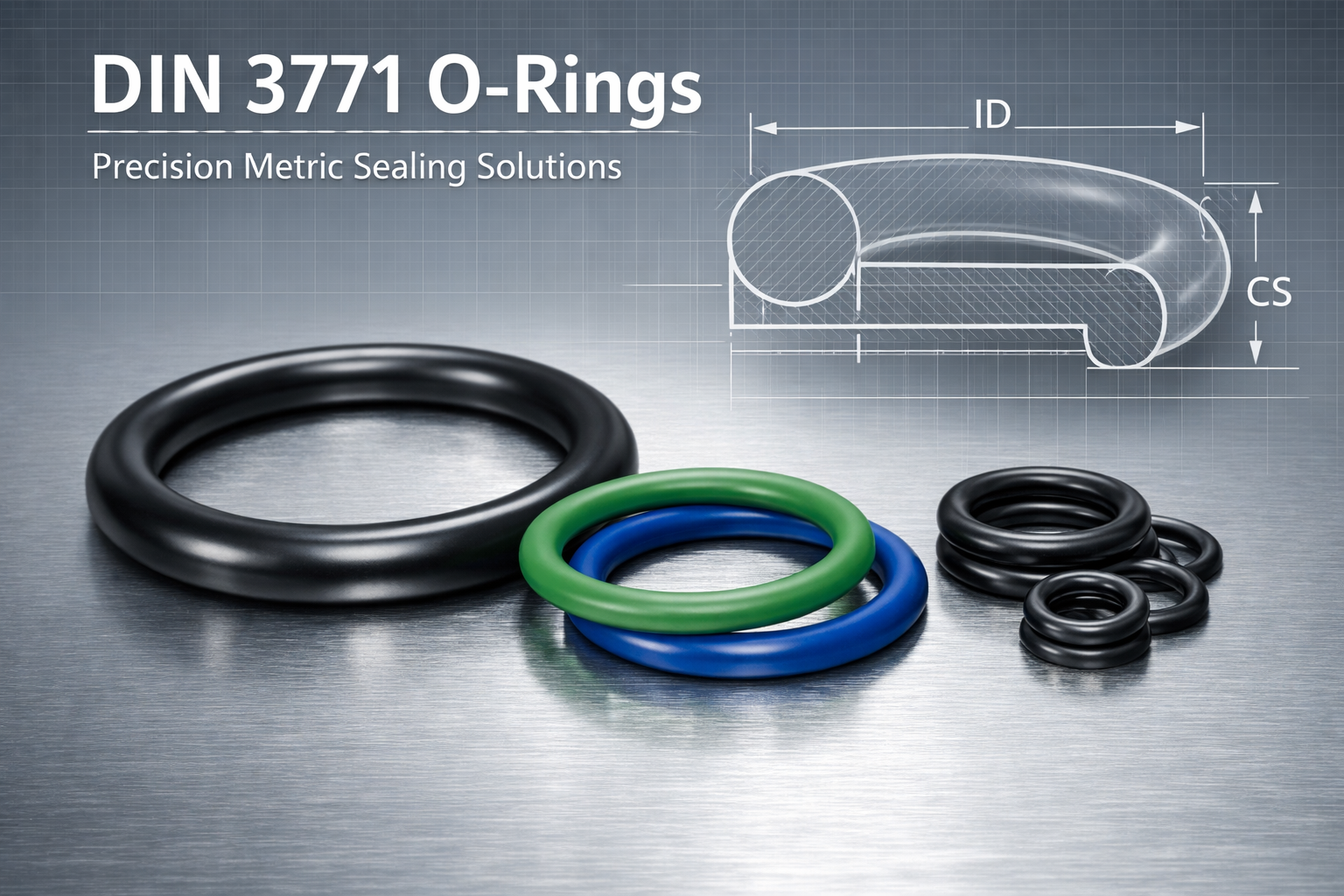
Technical Specifications of DIN 3771 O-Rings
The DIN 3771 standard is the cornerstone of metric O-ring design, specifying dimensions, tolerances, and surface quality. Our O-rings are categorized by Internal Diameter (ID) and Cross Section (CS), ensuring a perfect fit for hydraulic and pneumatic systems.
| Cross Section (mm) | ID Range (mm) | Tolerance Grade N | Tolerance Grade S |
|---|---|---|---|
| 1.80 | 1.80 – 17.00 | ± 0.13 – 0.21 | ± 0.08 – 0.12 |
| 2.65 | 14.00 – 38.70 | ± 0.19 – 0.37 | ± 0.11 – 0.22 |
| 3.55 | 18.00 – 200.00 | ± 0.23 – 1.35 | ± 0.14 – 0.80 |
High-Performance Materials for Every Condition
NBR (Nitrile)
Excellent oil resistance, ideal for standard hydraulic applications. Temperature range: -30°C to +100°C.
FKM (Viton™)
Superior chemical and high-temperature resistance. Ideal for aggressive media. Temperature range: -20°C to +200°C.
EPDM
Outstanding resistance to weathering, steam, and polar solvents. Temperature range: -50°C to +150°C.
Frequently Asked Questions
What is the difference between Grade N and Grade S in DIN 3771?
Grade N (Normal) is suitable for general industrial applications with standard surface quality requirements. Grade S (Special) features tighter tolerances and stricter surface imperfection limits, making it ideal for high-precision or safety-critical applications.
Can you provide DIN 3771 O-rings in non-standard materials?
Yes, we can formulate custom compounds such as HNBR, FFKM, or PTFE-coated elastomers to meet specific chemical or thermal requirements.
How do I determine the correct O-ring size for my groove?
Our engineering team can assist you in calculating the necessary squeeze and stretch based on your housing dimensions and operating pressure.