
Contact Us Now

O-Rings by Material for Industrial Sealing Applications
Selecting the correct elastomer compound is critical for sealing performance, service life, and compliance. We supply industrial O-rings in a wide range of materials including NBR, FKM, EPDM, HNBR, Silicone, and FFKM — engineered for specific temperature ranges, chemical media, pressure conditions, and industry standards.
Why O-Ring Material Selection Matters

Chemical Compatibility
O-rings must resist degradation from oils, fuels, acids, solvents, steam, or aggressive chemicals. Incorrect material selection may lead to swelling, cracking, or compression set.

Temperature Resistance
Each elastomer has defined operating temperature limits. Both low-temperature brittleness and high-temperature hardening must be considered.

Mechanical Performance
Compression set resistance, tensile strength, and abrasion performance determine long-term sealing reliability.
Industrial O-Ring Materials
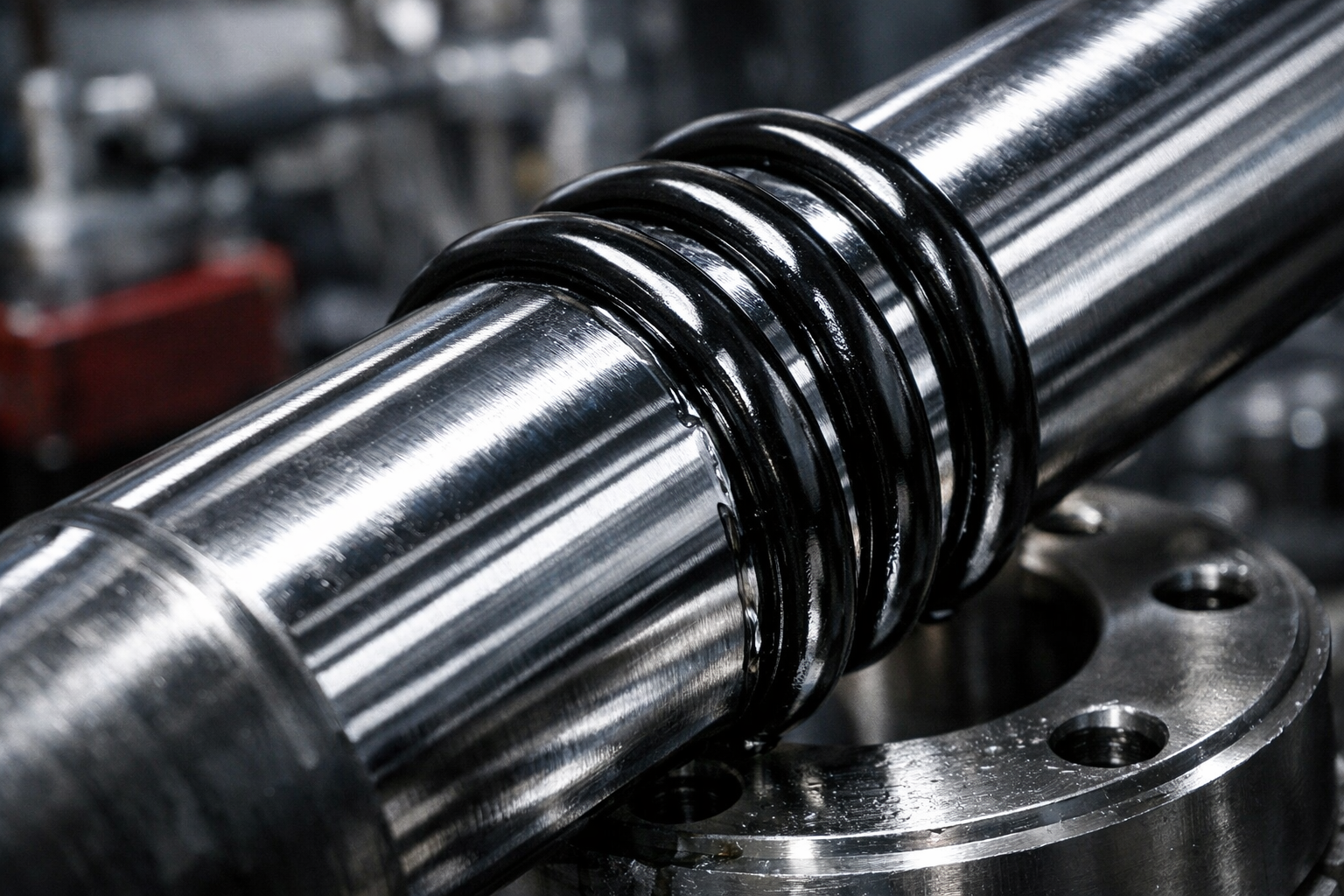
NBR (Buna-N) O-Rings
NBR O-rings are widely used for petroleum-based oils, hydraulic fluids, and general industrial sealing. They offer good mechanical strength and cost efficiency.
- Typical Temperature Range: -40°C to +120°C
- Common Applications: Hydraulics, pneumatic systems, fuel systems.
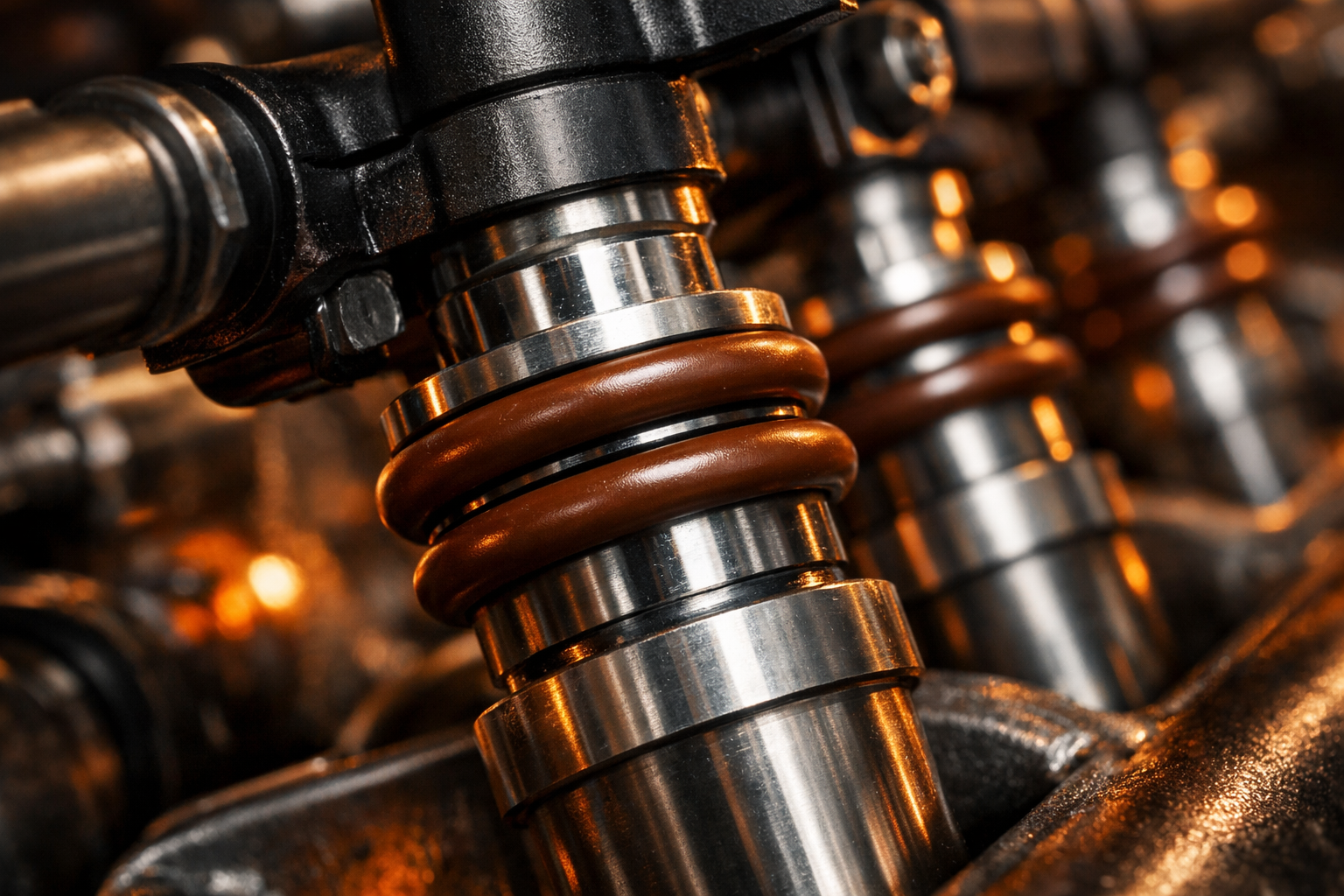
FKM (Viton®) O-Rings
FKM O-rings provide excellent resistance to high temperatures, fuels, oils, and aggressive chemicals. Suitable for demanding automotive and chemical environments.
- Typical Temperature Range: -20°C to +200°C (special grades up to 250°C)
- Common Applications: Automotive, chemical processing, oil & gas.
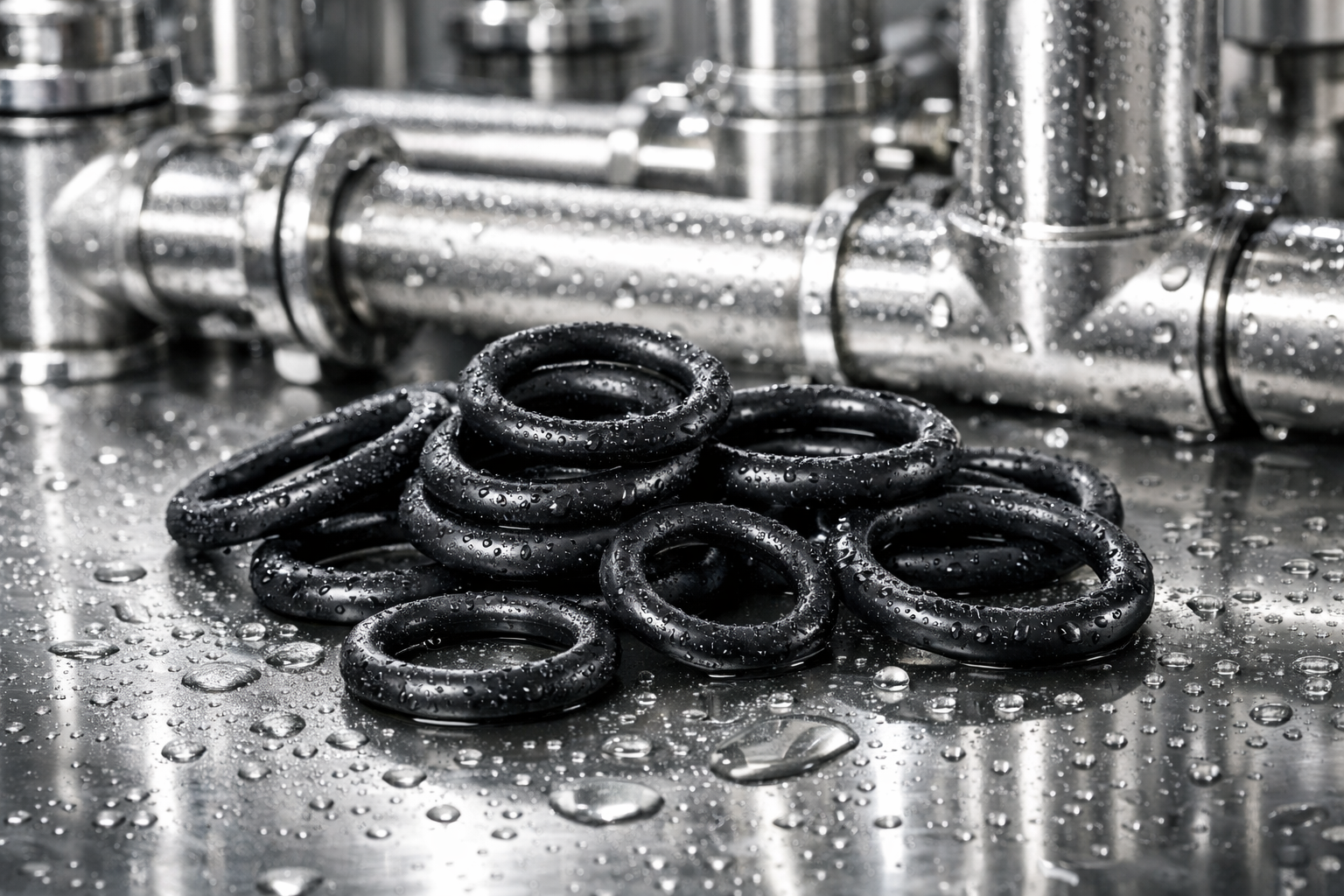
EPDM O-Rings
EPDM offers superior resistance to water, steam, brake fluids, and weathering. Not suitable for petroleum oils.
- Temperature Range: -50°C to +150°C
- Applications: Water systems, HVAC, food equipment (FDA grades available).
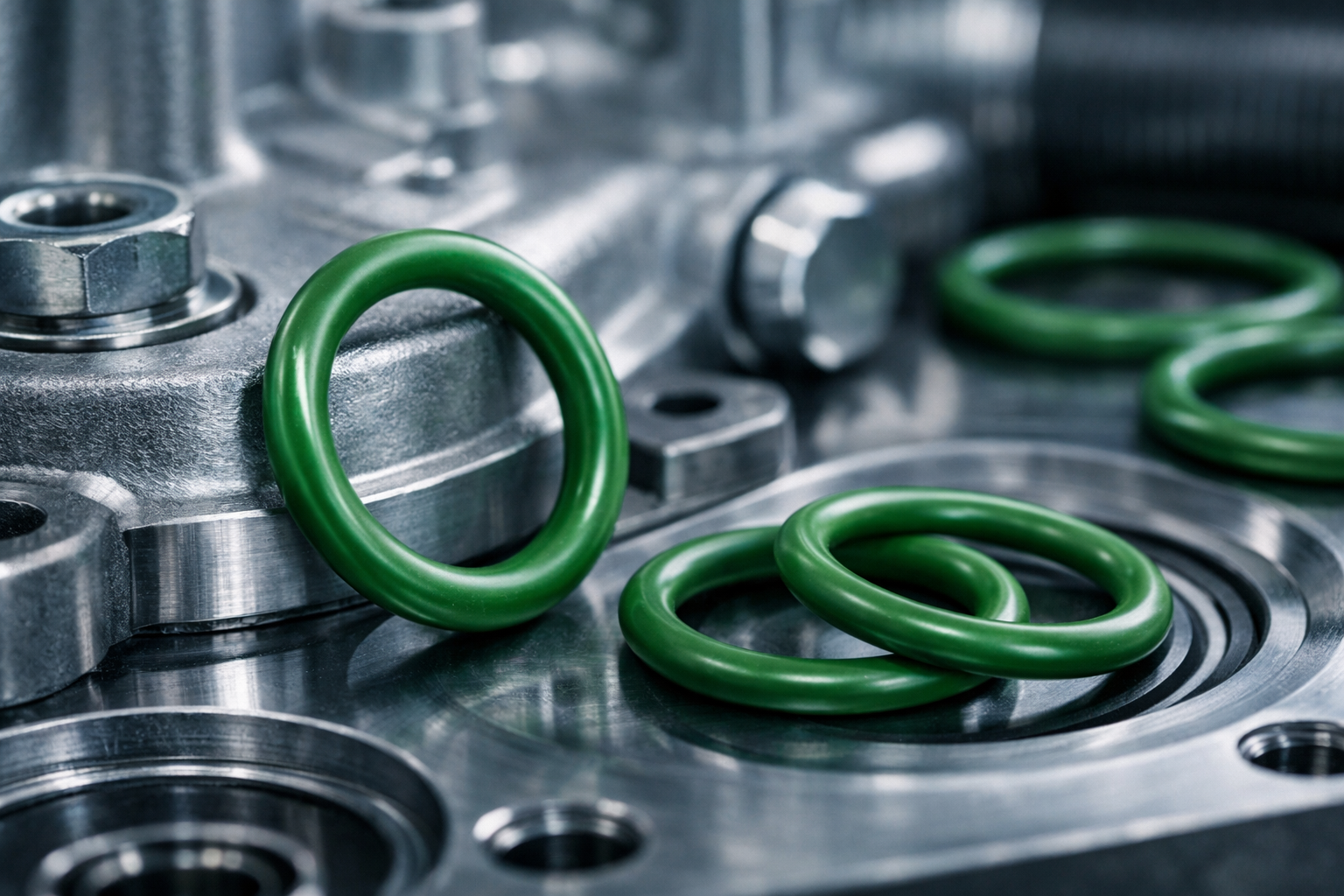
HNBR (HSN) O-Rings
HNBR improves heat and chemical resistance compared to NBR, with enhanced mechanical durability.
- Temperature Range: -30°C to +150°C
- Applications: Automotive AC systems, oil & gas equipment.
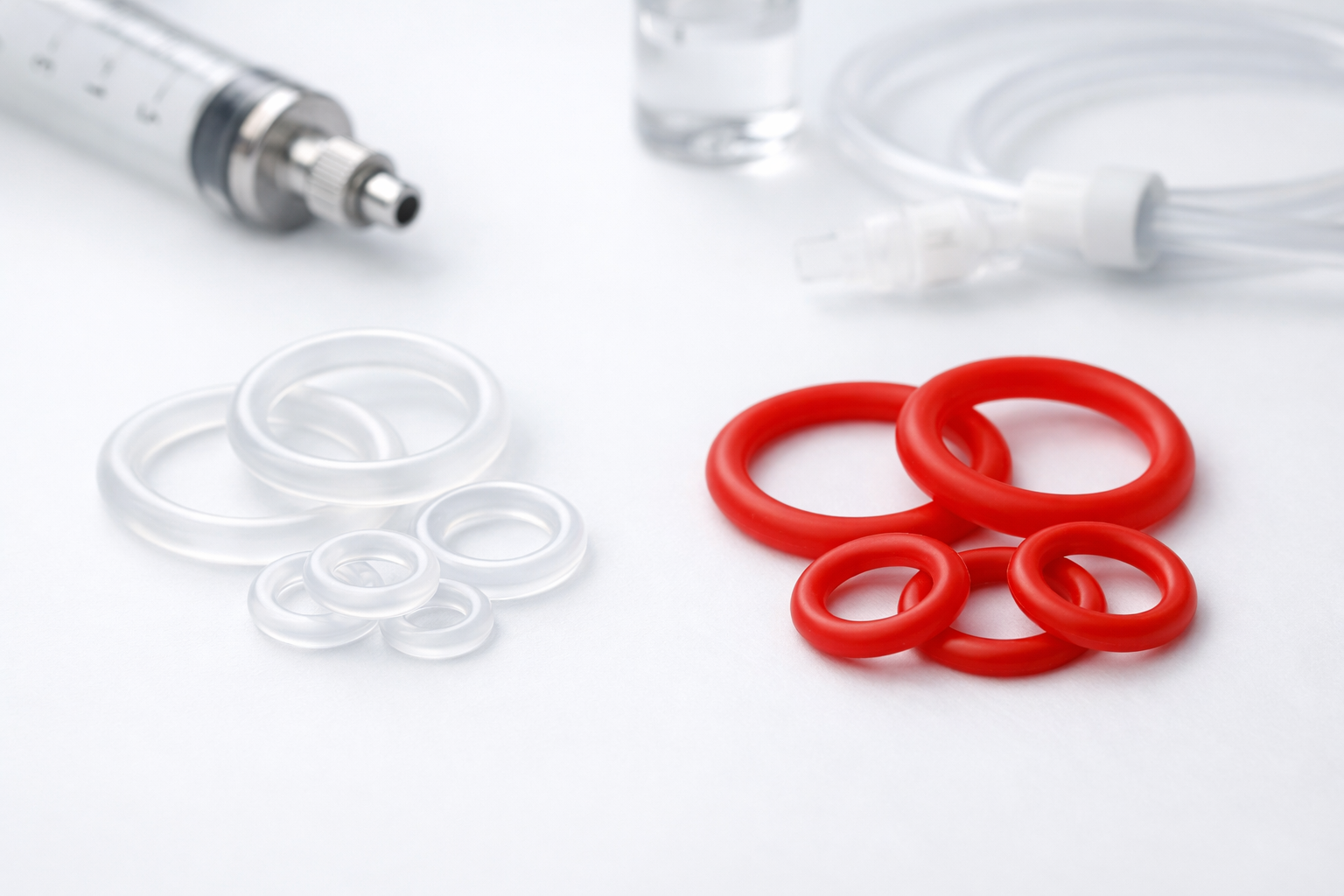
Silicone O-Rings
Silicone O-rings provide excellent flexibility at low temperatures and good resistance to ozone and weathering.
- Temperature Range: -60°C to +200°C
- Applications: Medical devices, food processing, electronics.
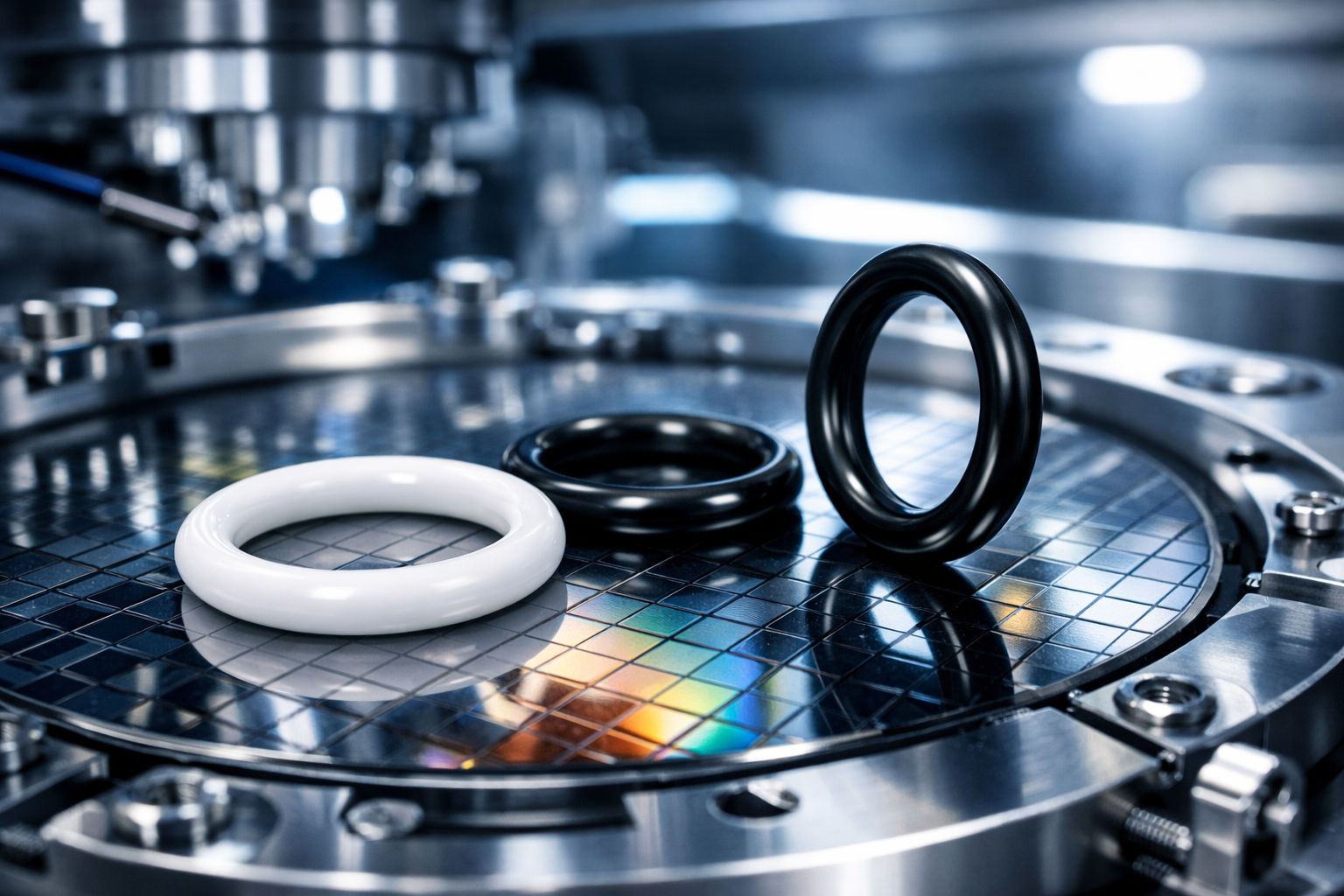
FFKM O-Rings
FFKM delivers the highest level of chemical and temperature resistance among elastomers. Designed for extreme chemical and semiconductor environments.
- Temperature Range: Up to +320°C (grade dependent)
- Applications: Semiconductor, aggressive chemicals, high-purity systems.
O-Ring Material Comparison
| Material | Temp Range | Oil Resistance | Water/Steam | Chemical | Typical Use |
|---|---|---|---|---|---|
| NBR | -40~120°C | Excellent | Moderate | Limited | Hydraulics |
| FKM | -20~200°C | Excellent | Limited | Excellent | Automotive |
| EPDM | -50~150°C | Poor | Excellent | Good | Water systems |
| HNBR | -30~150°C | Very Good | Moderate | Good | AC systems |
| Silicone | -60~200°C | Limited | Good | Moderate | Medical |
| FFKM | Up to 320°C | Excellent | Excellent | Outstanding | Semiconductor |
Material Selection by Industry
Different industries require specific elastomer performance due to regulatory compliance, pressure cycles, or media exposure.
Custom O-Ring Compounds & Engineering Support
We provide tailored elastomer solutions to meet your unique application demands:
- Custom hardness (Shore A 40–95)
- FDA / USP Class VI compounds
- Low-temperature FKM
- High-temperature FFKM
- Color identification options
- Small-batch & mass production
Frequently Asked Questions
What is the best O-ring material for oil resistance?
NBR and FKM are commonly selected for petroleum-based oils, offering excellent resistance to various lubricants and hydraulic fluids.
Which material handles high temperature best?
Standard FKM performs well up to 200°C, while FFKM is used for extreme temperatures above 250°C, providing superior thermal stability in harsh environments.
Can EPDM be used with fuel?
No. EPDM is not compatible with petroleum oils and fuels. It is best suited for applications involving water, steam, brake fluids, and weathering.
How do I choose the correct O-ring material?
Material selection depends on several critical factors: media compatibility, operating temperature range, pressure conditions, specific compliance requirements (e.g., FDA), and expected service life. Consulting with our engineering team can help determine the optimal material for your application.
Need Expert Guidance on O-Ring Material Selection?
Our team of sealing experts is ready to assist you in selecting the ideal O-ring material for your specific industrial application. Contact us today for a consultation or custom quote.